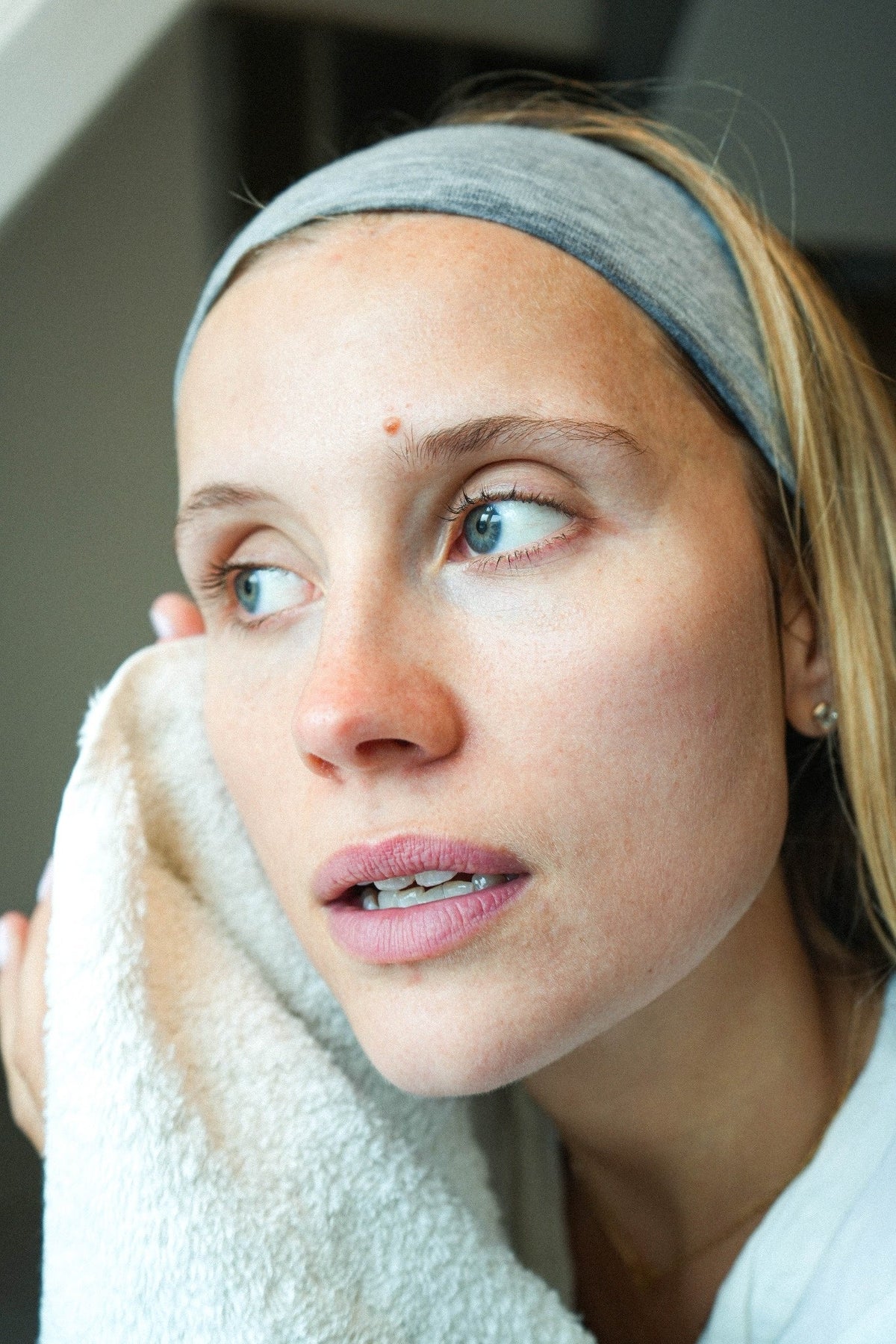
What temperature to wash your face with
In short
Wash lukewarm, rinse cool, keep it under a minute. Hot water strips the skin barrier within minutes; cool water barely touches it.
Redness +15%
pH up
Redness unchanged
Hydration +8%
What heat does
Warmth loosens the lipid layers that hold the outer skin together, so water escapes faster and irritants get in more easily. Even a warm surface at 44 °C for five minutes, with no water at all, raised water loss by a quarter.
Why cool is kinder
Cold tightens the vessels and leaves the barrier's structure in place. Redness did not change and hydration went up a little. Water on its own is a mild stress for the skin; heat is what multiplies it.
The cold-rinse bonus
In a Dutch trial of 3,018 adults, ending the daily shower with 30 to 90 seconds of cold water cut sick leave by 29% over a month. That measures general resilience rather than the face, but it shows cool water is nothing to fear.
The routine
A pH-balanced cleanser foams fully in lukewarm water, so hot water is never needed.
- 1A lukewarm splash, 32 to 34 °C, to loosen oil.
- 2Two pumps, massaged over face and neck for 30 seconds.
- 3A cool rinse, around 20 °C, for 15 to 30 seconds.
- 4Pat dry. Serum within a minute, while the skin is still damp.
Figures are study averages; individual skin varies. Patch-test any new product.
Sources (3)
- Herrero-Fernández M et al. Impact of water exposure and temperature changes on skin barrier function. Journal of Clinical Medicine, 2022. Observational study, n = 50.
- Buijze GA et al. The effect of cold showering on health and work: a randomized controlled trial. PLoS ONE, 2016. Randomised trial, n = 3,018.
- Mooventhan A, Nivethitha L. Scientific evidence-based effects of hydrotherapy on various systems of the body. North American Journal of Medical Sciences, 2014. Review of studies 1986 to 2012.